Skip to content

Ever wondered why your shoulders still look flat from the side or why you keep feeling tightness and discomfort around your shoulders despite training regularly?
Chances are, the issue isn’t how hard you train—but which shoulder exercises you prioritize.
Two of the most talked-about isolation exercises for shoulder development are the rear delt fly and the lateral raise. While both target the deltoids, they serve very different purposes. Understanding these differences can help you build broader shoulders, improve posture, and reduce injury risk—all at the same time.
As a certified personal trainer, I’ll break this down in simple, practical language, so you can confidently decide which exercise fits your goals—or why you probably need both.
Understanding Shoulder Anatomy (Quick & Simple)
Your shoulders are made up of three main muscle heads:
- Anterior (front) delts – used heavily in pressing movements
- Lateral (side) delts – responsible for shoulder width
- Posterior (rear) delts – support posture and pulling movements
Most people unintentionally overtrain front delts through bench presses and push-ups, while neglecting rear delts, leading to imbalance and shoulder pain.
What Is a Rear Delt Fly?

The rear delt fly is an isolation exercise that targets the posterior deltoids, located at the back of your shoulders.
Muscles Worked
- Primary: Rear delts
- Secondary: Rhomboids, middle trapezius, upper back muscles
How It’s Usually Performed
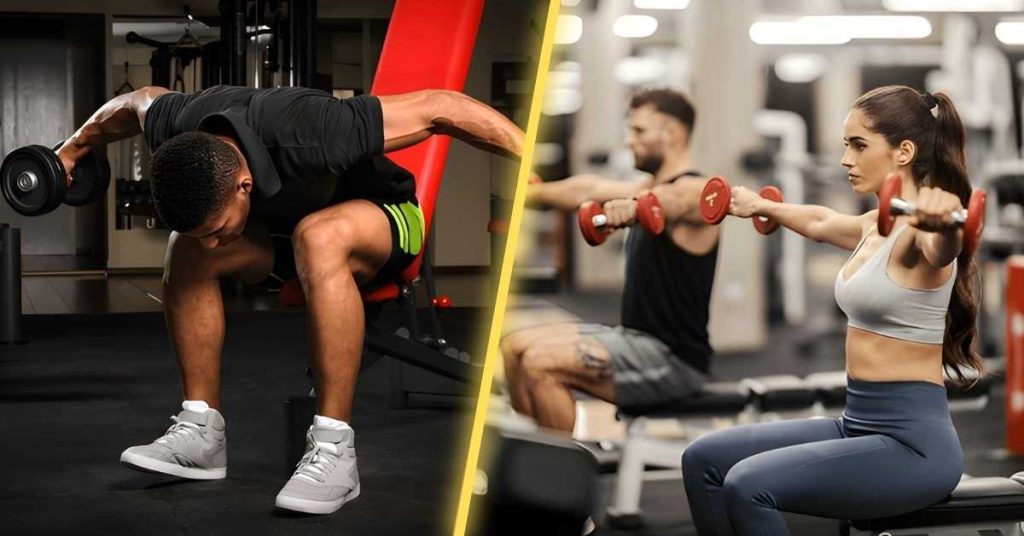
- Bent over with dumbbells
- Using cables
- Reverse pec deck machine
This movement involves horizontal arm movement, pulling your arms out and back rather than lifting them to the side.
Why Rear Delt Fly Matters
Rear delts play a big role in:
- Shoulder stability
- Upright posture
- Injury prevention
According to strength research, rear delts can be up to 30–40% less activated in typical gym routines compared to front delts, making direct training essential.
What Is a Lateral Raise?

The lateral raise is one of the best exercises for building shoulder width and roundness.
Muscles Worked
- Primary: Lateral (medial) delts
- Secondary: Upper traps (if form slips)
How It’s Usually Performed
- Dumbbell lateral raises
- Cable lateral raises
- Machine lateral raises
The arms lift out to the sides, creating tension directly on the side delts.
Why Lateral Raises Are Popular
If your goal is that broad, capped shoulder look, lateral raises are non-negotiable. Physique athletes rely heavily on this movement for aesthetic development.
Rear Delt Fly vs Lateral Raise: Key Differences
1. Movement Pattern
- Rear delt fly: Arms move backward in a horizontal plane
- Lateral raise: Arms lift outward and upward
2. Main Muscle Focus
- Rear delt fly: Posterior delts + upper back
- Lateral raise: Side delts only
3. Training Purpose
- Rear delt fly: Balance, posture, shoulder health
- Lateral raise: Size, width, visual appeal
4. Posture Impact
- Rear delt fly improves posture by counteracting rounded shoulders
- Lateral raise has minimal posture benefit
| Aspect | Rear Delt Fly | Lateral Raise |
|---|---|---|
| Movement Pattern | Arms move backward in a horizontal plane | Arms lift outward and upward |
| Main Muscle Focus | Posterior delts + upper back | Side delts only |
| Training Purpose | Balance, posture, shoulder health | Size, width, visual appeal |
| Posture Impact | Improves posture by counteracting rounded shoulders | Minimal posture benefit |
To further expand your knowledge, explore how face pulls compare to rear delt fly variations to unpack their distinct roles in shoulder stability and strength.
Muscle Activation & Science Insight
EMG studies show that:
- Lateral raises produce the highest activation of the medial deltoid compared to presses
- Rear delt fly variations outperform rows for isolating the posterior delts
This means isolation work is not optional—it’s necessary for full shoulder development.
Benefits of Rear Delt Fly
- Improves shoulder alignment and posture
- Reduces risk of shoulder impingement
- Strengthens upper-back stability
- Enhances pulling exercises like rows and deadlifts
Trainer insight: Many clients report reduced shoulder discomfort within 4–6 weeks of consistently training rear delts.
Benefits of Lateral Raise
- Builds wider shoulders and V-taper
- Improves upper-body symmetry
- Enhances shoulder aesthetics
- Beginner-friendly and easy to progress
A survey among recreational lifters found that over 70% noticed visible shoulder width improvements after adding lateral raises consistently for 8 weeks.
Which Exercise Builds Bigger Shoulders?
If we’re talking visual size:
- Lateral raises win for width
- Rear delt fly wins for depth and balance
For truly big shoulders, both are essential.
Which One Should You Choose?
Choose rear delt fly if:
- You have rounded shoulders
- You sit long hours
- You experience shoulder pain
- You want better posture
Choose lateral raises if:
- Your shoulders look narrow
- You want a stronger V-taper
- Aesthetic growth is your priority
Best choice? Use both.
Can You Do Both in the Same Workout?
Yes—and you should.
Recommended approach:
- Lateral raises: 2–4 sets, 10–15 reps
- Rear delt fly: 2–4 sets, 12–20 reps
- Frequency: 2–3 times per week
Rear delt fly works well on pull or upper-body days, while lateral raises fit nicely on push or shoulder days.
For a deeper dive into building well-rounded shoulders, don’t miss our breakdown of the front raise vs. lateral raise—it’s packed with insights to help you refine your workout strategy.
Proper Form Tips (Very Important)
Rear Delt Fly
- Use light weights
- Keep a neutral spine
- Think “pull wide,” not “lift heavy”
Lateral Raise
- Lead with elbows
- Stop at shoulder height
- Control the movement—no swinging
Common Mistakes to Avoid
- Using too much weight
- Turning raises into momentum exercises
- Ignoring rear delts completely
- Overtraining front delts
Injury Prevention & Rehab Value
Physical therapists often include rear delt fly variations in shoulder rehab programs because of their role in stabilizing the shoulder joint. Balanced shoulder training significantly lowers injury risk in both athletes and recreational lifters.
Final Verdict
The debate between rear delt fly vs lateral raise isn’t about which is better—it’s about what your shoulders need.
- Lateral raises build width
- Rear delt fly builds balance and health
If you want strong, aesthetic, pain-free shoulders, don’t choose one over the other—train both smartly.