Skip to content
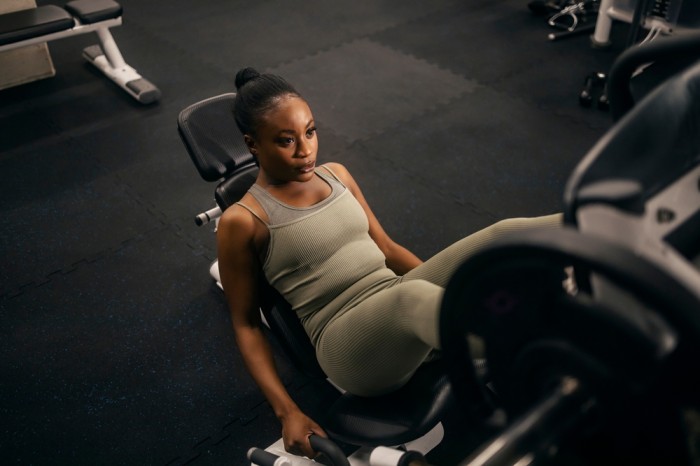
Ever wonder why some people seem to have sculpted, powerful quads while others struggle despite hours in the gym?
Often, it’s not about how much time you spend—it’s about how you train. The leg press is one of the most effective tools for building strong, defined quads safely and efficiently. With the right variations, foot placement, and techniques, you can target all parts of your quadriceps, minimize injury risk, and maximize growth.
In this guide, we’ll break down leg press variations for maximum quad growth, including advanced techniques, common mistakes, sample workouts, and FAQs to make sure your leg day is productive and safe.
Understanding the Quadriceps Anatomy

Before diving into variations, it helps to know the muscles you’re targeting:
- Rectus femoris – lifts your thigh and extends the knee.
- Vastus lateralis – the outer thigh muscle, key for quad width.
- Vastus medialis – the inner quad “teardrop,” crucial for knee stability.
- Vastus intermedius – sits underneath rectus femoris, supporting knee extension.
Fact: Studies suggest that training all four heads of the quadriceps leads to better strength and muscle symmetry.
Why the Leg Press Works for Quad Growth
The leg press has some unique advantages over squats:
- Safer for heavy lifting: Less strain on your lower back.
- Quad-focused: Adjusting foot placement allows you to emphasize different quad heads.
- Supports progressive overload: You can gradually increase weight to boost hypertrophy.
Testimonial: “After adding leg press variations to my routine, my quads grew 2 inches in three months, and my knees felt healthier than ever,” says fitness enthusiast John, 28.
Leg Press Basics: Form and Technique
Form is everything. Here’s how to set up correctly:
- Seat adjustment: Your knees should form roughly a 90° angle at the starting position.
- Foot placement: Keep your feet flat and even to target the quads effectively.
- Back support: Keep your lower back pressed against the seat throughout the movement.
Avoid these mistakes:
- Locking your knees at full extension.
- Lifting your hips off the seat.
- Using momentum instead of controlled movement.
Pro tip: Start with moderate weight and focus on controlled reps to feel the quads working.
Foot Placement and Quad Activation
Where you place your feet changes which quad heads are engaged:
- Low foot placement: More stress on vastus medialis (inner quads).
- High foot placement: Emphasizes glutes and hamstrings more than quads.
- Narrow stance: Focuses on the outer quads (vastus lateralis).
- Wide stance: Engages inner quads and adductors.
- Toe positioning: Slight outward toes target inner quads; inward toes target outer quads.
Fact: EMG research shows low and narrow foot placements can boost quad activation by up to 20%.
Check out this detailed guide on leg press vs. hip thrusts for a closer look at lower body training techniques.
Leg Press Variations for Maximum Quad Growth

Standard Leg Press
- Feet shoulder-width apart.
- Works all quad heads evenly.
- Great starting point for beginners.
Narrow Stance
- Feet close together to emphasize the outer quads.
- Lighter weight recommended to protect the knees.
Low Foot Placement
- Feet lower on the platform increase stress on the inner quads.
- Ideal for finishing sets with high reps.
One-Leg Press
- Trains each leg individually to fix imbalances.
- Engages stabilizers and the core.
Hack Squat / Vertical Leg Press
- Steeper angle increases quad activation.
- Perfect for advanced lifters.
Reverse Leg Press
- Push backward with feet on the top edge of the platform.
- Focuses on vastus medialis and knee stability.
Rotational / Angled Press
- Slight foot rotation targets inner and outer quads differently.
- Adds variety and reduces training monotony.
Advanced Techniques to Boost Quad Growth
- Drop sets: Lower the weight after failure to push quads further.
- Tempo training: Slow lowering phase, explosive pressing phase.
- Pause reps: Hold at the bottom to increase time under tension.
- Partial reps: Keep contraction at the top of the movement for extra growth.
- Supersets: Pair leg press with lunges or leg extensions to fully fatigue the quads.
Common Mistakes to Avoid
- Using too much weight and sacrificing form.
- Locking knees at the top.
- Lifting hips off the seat.
- Ignoring mind-muscle connection.
- Sticking to one variation without foot placement changes.
Tip: Focus on slow, controlled movements, and gradually increase the weight.
Sample Quad-Focused Leg Press Workouts
Beginner
- Standard Leg Press: 3×12–15 reps
- Low Foot Placement: 3×15 reps
Intermediate
- Narrow Stance: 4×10–12 reps
- One-Leg Press: 3×12 each leg
- Low Foot Placement: 3×12–15 reps
Advanced
- Combine Narrow, Low, and Rotational Press: 5×8–10 reps
- Finish with drop sets
- Tempo: 3 seconds down, 1 second up
Complementary Exercises for Quad Growth
- Squats and front squats
- Bulgarian split squats
- Lunges
- Leg extensions
Fact: Research shows combining compound and isolation movements can lead to 30% greater quad growth than compound lifts alone.
Recovery and Nutrition Tips
- Give your quads 48–72 hours to recover between heavy sessions.
- Stretch and foam roll to improve flexibility and reduce soreness.
- Protein: 1.6–2.2g per kg of body weight per day for muscle repair.
- Sleep: 7–8 hours for optimal recovery.
To dive deeper into your training options, check out our comparison of the Belt Squat vs. Leg Press—it’s a must-read for optimizing your lower body workouts!
Frequently Asked Questions (FAQs)
How often should I do leg press for maximum quad growth?
1–2 times per week is usually enough if combined with other quad exercises. Focus on intensity and variety, not just frequency.
Can leg press replace squats?
Not entirely. Squats are a compound lift that recruit more muscles and core stability. Leg press complements squats by isolating the quads and allowing heavier weights safely.
Is the leg press safe for beginners?
Yes, it’s safer than free-weight squats for heavy lifting, as long as you maintain proper form and don’t lock your knees.
Which leg press variation is best for the inner quads?
Low foot placement and slight outward toe rotation target the vastus medialis effectively.
Should I use heavy or light weights for quad growth?
Both have benefits. Moderate to heavy weight for 6–12 reps builds size, while lighter weight with high reps improves mind-muscle connection and endurance.
Final Thoughts
The leg press is a versatile, powerful tool to build strong, defined quads. By varying foot placement, using different leg press variations, and incorporating advanced techniques, you can target every part of your quadriceps for maximum growth. Remember, consistency, form, and progressive overload are your best friends.