Skip to content
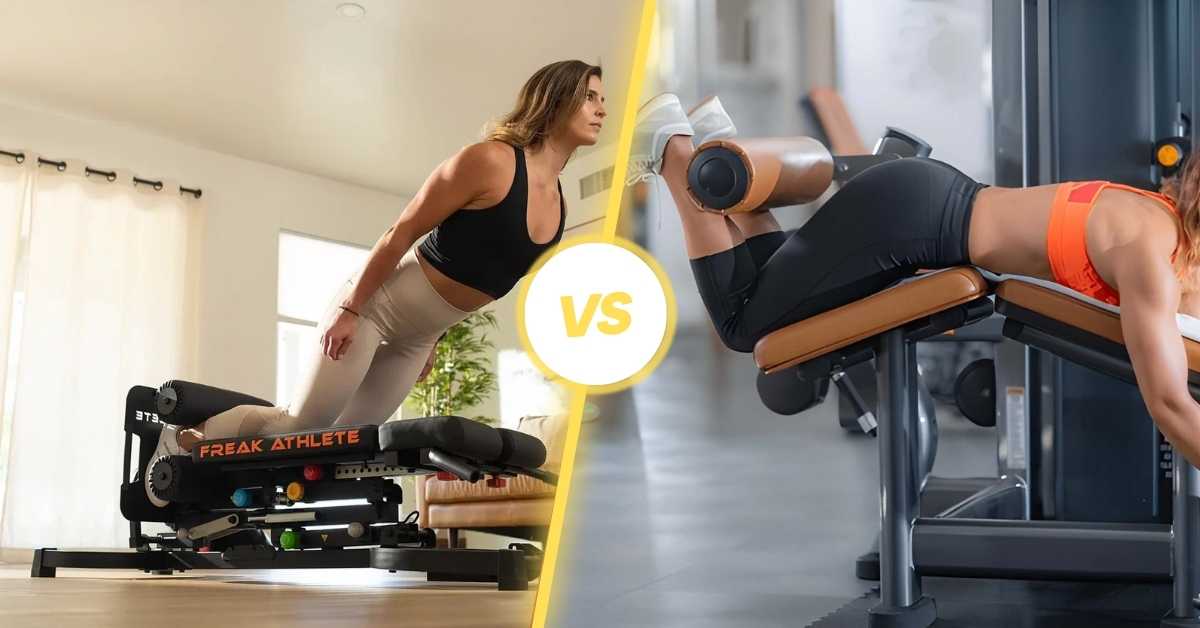
Have you ever finished leg day and wondered whether you should be doing Nordic curls instead of leg curls—or maybe both?
If your goal is stronger hamstrings, better athletic performance, or fewer injuries, this question matters more than you think. As a certified personal trainer, I’ve coached beginners, athletes, and rehab clients, and I can confidently say: the “best” exercise depends on your goal, experience level, and body.
Let’s break it down in simple terms so you can make the right choice.
Why Hamstring Strength Matters
Your hamstrings aren’t just for aesthetics. They play a major role in:
- Knee flexion (bending your knee)
- Hip extension (powering movements like sprinting and deadlifting)
- Controlling your leg during running and jumping
Fact: Research consistently shows that weak hamstrings are one of the biggest risk factors for hamstring strains, especially in sports like football, soccer, and sprinting. Strong hamstrings don’t just perform better—they protect you.
What Is a Nordic Curl?

The Nordic curl (also called the Nordic hamstring exercise) is a bodyweight, partner-assisted movement where you slowly lower your upper body toward the floor while your ankles are anchored.
How It Works
You start tall on your knees, keep your hips extended, and resist gravity as long as possible using your hamstrings. The focus is mainly on the eccentric phase—when the muscle is lengthening under load.
Muscles Worked
- Hamstrings (primary)
- Glutes (supporting role)
- Core muscles for stability
Why It’s Unique
Nordic curls load the hamstrings at long muscle lengths, which is exactly where most hamstring injuries occur.
Stat: Multiple sports medicine studies show that teams using Nordic curls reduced hamstring injury rates by 50–70% over a season. That’s massive.
What Is a Leg Curl?

The leg curl is a machine-based exercise commonly found in gyms. You bend your knees against resistance while seated, lying down, or standing.
Types of Leg Curls
- Lying leg curl: Great for overall hamstring engagement
- Seated leg curl: Emphasizes the hamstrings at a stretched position
- Standing leg curl: Useful for single-leg strength and balance
Muscles Worked
- Hamstrings (isolated)
- Minimal involvement from other muscle groups
Why People Love It
Leg curls are controlled, easy to learn, and excellent for muscle hypertrophy (muscle growth).
Nordic Curl vs Leg Curl: Key Differences Explained Simply

1. Movement Pattern
- Nordic curl: Closed-chain, bodyweight, eccentric-dominant
- Leg curl: Open-chain, machine-based, concentric-focused
2. Difficulty Level
- Nordic curls are very advanced
- Leg curls are beginner-friendly
3. Muscle Activation
Nordic curls activate a higher percentage of hamstring fibers, while leg curls allow you to target the muscle more precisely.
4. Equipment
- Nordic curls: partner, bench, or ankle anchor
- Leg curls: gym machine
If you enjoy comparisons like this, you may also want to check out our Pendulum Squat vs. Leg Press guide—it’s a quick, insightful read to help you choose the right tool for your leg training.
Benefits of Nordic Curls
- Exceptional eccentric hamstring strength
- Proven reduction in injury risk
- Improved sprint speed and athletic performance
- Minimal equipment required
- Strong carryover to sports movements
Coach Insight: Many elite athletes can leg curl heavy weights but struggle with even a few controlled Nordic reps. That tells you how demanding—and effective—they are.
Benefits of Leg Curls
- Excellent for building hamstring size
- Easy to progressively overload
- Safe and controlled for beginners
- Useful during injury rehabilitation
- Great for correcting left–right muscle imbalances
Testimonial (Client Experience): “After adding seated leg curls twice a week, I finally felt my hamstrings growing without knee pain. It helped me build confidence before progressing to harder movements.”
Drawbacks You Should Know
Nordic Curl Limitations
- Extremely challenging for beginners
- Can cause severe muscle soreness if overused
- Hard to load progressively
- Requires proper warm-up and recovery
Leg Curl Limitations
- Less functional for sports performance
- Limited eccentric overload
- Depends on machine availability
- Less carryover to sprinting and jumping
Which Is Better for Your Goal?
For Muscle Growth
Leg curls usually win. They allow higher volume, better mind-muscle connection, and safer progression.
For Strength & Power
Nordic curls are superior due to their high eccentric loading.
For Injury Prevention
Nordic curls are one of the most evidence-backed hamstring injury prevention exercises available.
For Beginners
Start with leg curls. Build baseline strength first.
For Athletes
Nordic curls are almost non-negotiable, especially for running-based sports.
Rehab & Physical Therapy Use
In early rehab, leg curls are safer because you control the load. Nordic curls are typically introduced later, once strength and tissue tolerance improve.
Should You Do Both?
Absolutely. The smartest programs combine them.
Example Weekly Split:
- Day 1: Leg curls (moderate weight, higher reps)
- Day 2: Nordic curls (low volume, slow tempo)
This combination covers hypertrophy, strength, and injury prevention.
Common Mistakes to Avoid
- Rushing Nordic curls instead of controlling the descent
- Using momentum on leg curls
- Skipping warm-ups
- Overtraining hamstrings with too much volume
Safety & Best Practices
- Always warm up with light hamstring movements
- Limit Nordic curls to 2–4 sets per session
- Expect soreness—manage recovery properly
- Stop if you feel sharp pain, not muscle fatigue
Final Verdict: Nordic Curl vs Leg Curl
There is no single “winner.”
- Choose leg curls if you want muscle growth, control, and beginner safety
- Choose Nordic curls if you want elite-level strength, performance, and injury resilience
Best option? Use both strategically.
FAQs
Are Nordic curls better than leg curls?
Not better—different. Nordic curls excel at eccentric strength and injury prevention.
Can beginners do Nordic curls?
Yes, but only with assistance or regressions.
Do leg curls build hamstring mass?
Yes, very effectively when programmed correctly.
How often should I do Nordic curls?
1–2 times per week is enough for most people.