Skip to content
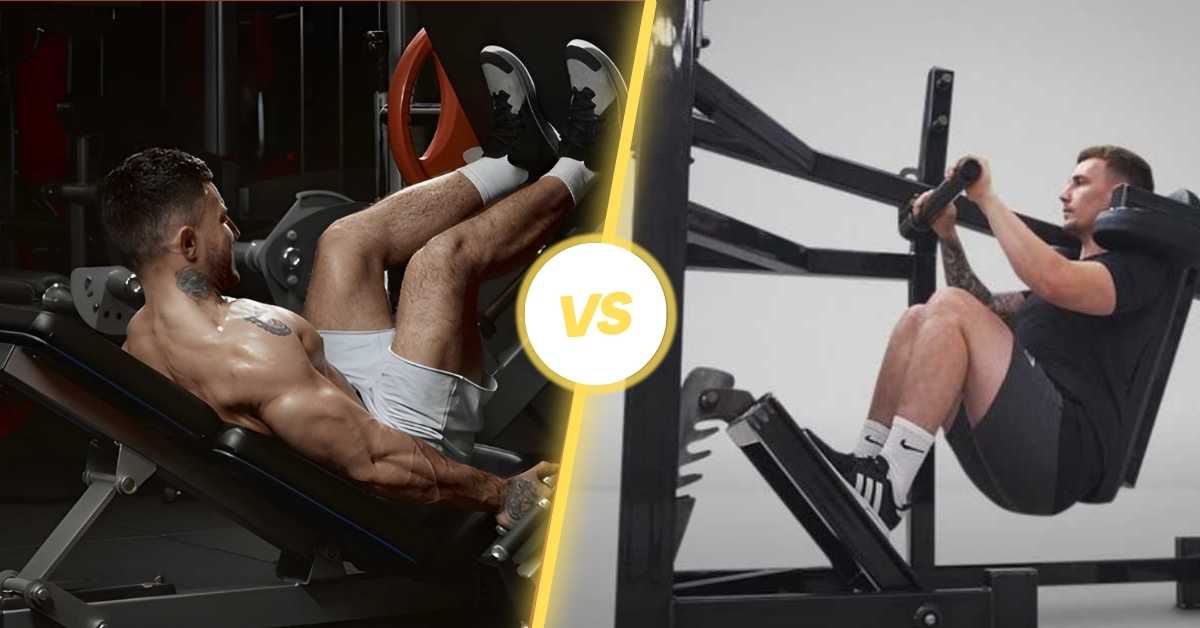
“You’ve loaded the plates, you’re ready for leg day… but which machine will actually give you better results—the pendulum squat or the leg press?”
If you’ve ever stood in the gym asking yourself this question, you’re not alone. As a certified personal trainer, I hear this almost every week. Both exercises are popular, both can build serious leg muscle, and both are often marketed as “safer than squats.” But they are not the same, and choosing the right one can make a real difference in your leg growth, strength, and joint health.
In this guide, I’ll break down pendulum squat vs leg press in simple, practical language. No complicated biomechanics jargon—just what you actually need to know to train smarter and grow stronger.
Why Exercise Choice Matters on Leg Day
Legs are made up of some of the largest and strongest muscles in the body—quads, glutes, hamstrings, and adductors. Research consistently shows that training large muscle groups increases overall muscle-building hormone response and calorie expenditure.
But here’s the catch:
Not all leg exercises load these muscles in the same way.
Some exercises:
- Emphasize deep knee flexion
- Keep constant tension on the quads
- Reduce stress on the lower back
- Allow heavier weights with less balance demand
That’s exactly where the pendulum squat and leg press come in.
What Is a Pendulum Squat?
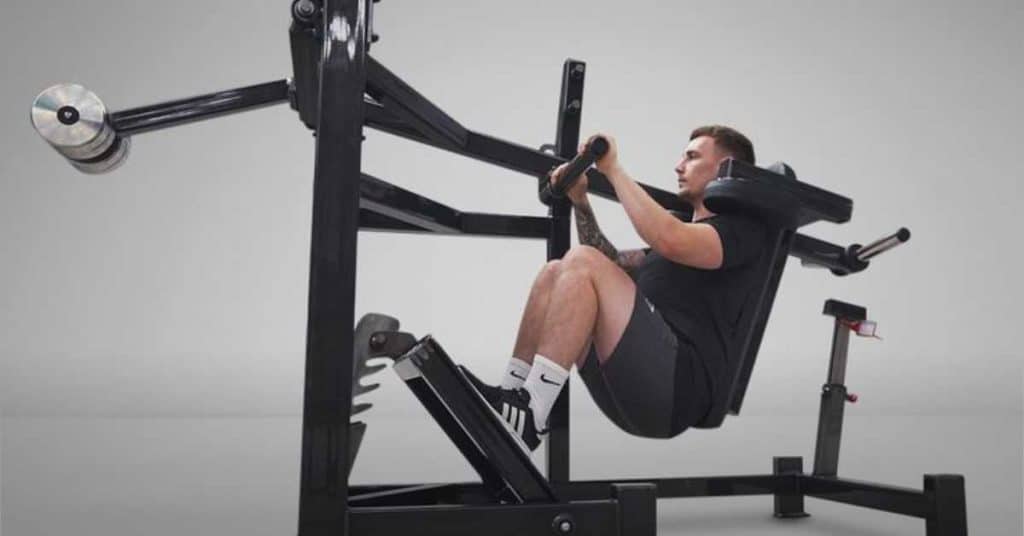
A pendulum squat is a plate-loaded machine that allows you to squat along a curved arc rather than a straight line. Unlike a Smith machine, the movement feels more natural and closely mimics a deep barbell squat—but with added support.
How the Pendulum Squat Works
- Your back stays supported
- Your feet stay planted
- The machine guides you through a deep squat pattern
- Resistance increases as you move through the strongest part of the lift
This creates constant tension, especially on the quadriceps.
Muscles Worked in the Pendulum Squat
- Primary: Quadriceps (especially vastus medialis and lateralis)
- Secondary: Glutes, hamstrings, adductors
- Stabilizers: Core (less than free squats, more than leg press)
Benefits of the Pendulum Squat
- Encourages deep range of motion
- Very high quad activation
- Less spinal compression than barbell squats
- Great option for lifters with lower-back issues
- Strong carryover to free squat strength
A small EMG-based analysis published in strength training literature suggests that deep knee flexion movements (like pendulum squats) produce higher quad activation than partial-range machine work.
Limitations of the Pendulum Squat
- Not available in all gyms
- Fixed movement path may not suit everyone’s hip anatomy
- Can feel challenging for complete beginners
What Is a Leg Press?
The leg press machine is one of the most commonly used lower-body machines worldwide. It allows you to push weight away from your body using your legs while your back remains fully supported.
Types of Leg Press Machines
- 45-degree leg press (most common)
- Horizontal leg press
- Vertical leg press (least common)
Each version loads the muscles slightly differently, but the basics remain the same.
Muscles Worked in the Leg Press
- Primary: Quadriceps and glutes
- Secondary: Hamstrings, calves
- Minimal core activation
Benefits of the Leg Press
- Very beginner-friendly
- Allows heavy loading without balance issues
- Easy to adjust foot placement to target different muscles
- Ideal for high-volume leg training
According to gym usage surveys, the leg press consistently ranks among the top 5 most-used lower-body machines, especially among beginners and rehabilitation clients.
Limitations of the Leg Press
- Less functional than squat-based movements
- Easy to use poor form (shallow reps, locking knees)
- Limited transfer to athletic movements
- Can stress knees if range of motion is poor
Pendulum Squat vs. Leg Press: Head-to-Head Comparison

1. Muscle Activation and Hypertrophy
- Pendulum squat: Higher quad activation due to deeper knee bend and upright torso
- Leg press: Better for total leg volume and glute involvement depending on foot placement
If your goal is quad-dominant hypertrophy, pendulum squats often win.
2. Range of Motion
Pendulum squats allow:
- Deeper stretch at the bottom
- More time under tension
Leg press range of motion depends heavily on:
- Seat setup
- Mobility
- Ego loading (too much weight = shallow reps)
3. Strength Development
- Pendulum squats translate better to barbell squat strength
- Leg press strength does not always carry over to free weights
4. Joint Stress and Safety
- Pendulum squat: Less lower-back stress, controlled knee tracking
- Leg press: Can increase knee shear force if depth is excessive or pelvis lifts
| Feature | Pendulum Squat | Leg Press |
|---|---|---|
| Range of Motion | Full range with stretch at the bottom | Depends on seat setup and mobility |
| Strength Development | Translates well to barbell squats | Limited carryover to free weight exercises |
| Joint Stress and Safety | Less stress on lower back, controlled knee tracking | Potential for increased knee shear force or pelvic lifting |
| Time Under Tension | Longer time under tension | Dependent on form and weight used |
A real-world stat:
As a trainer, I’ve seen more knee irritation from poorly performed leg presses than from properly coached pendulum squats.
If you’re intrigued by this comparison, don’t stop here—be sure to explore how the Pendulum Squat stacks up against the Hack Squat for even deeper insights on building unstoppable legs.
Which Is Better for Muscle Growth?
The honest answer: both—if used correctly.
Pendulum squat excels at:
- Quad thickness
- Deep stretch hypertrophy
- Mechanical tension
Leg press excels at:
- High-rep volume
- Metabolic stress
- Finishing the muscles after compounds
For most lifters, combining them produces the best results.
Which Is Better for Beginners?
For beginners:
- Leg press feels safer and easier to learn
- Pendulum squat may feel intimidating at first
However, with proper coaching, beginners can safely use pendulum squats at lighter loads.
Trainer tip:
Start beginners on the leg press, then progress them to pendulum squats once basic leg strength and mobility improve.
Which Is Better for Advanced Lifters?
Advanced lifters benefit more from pendulum squats because:
- They allow heavy loading with deep range
- They reduce lower-back fatigue compared to barbell squats
- They’re excellent for breaking quad growth plateaus
Leg press remains useful for:
- Drop sets
- Rest-pause sets
- High-rep hypertrophy work
Pendulum Squat vs. Leg Press for Knee Pain
This depends on technique, not the machine.
Pendulum squats:
- Often knee-friendly when done with controlled depth
- Encourage proper knee tracking
Leg press:
Can aggravate knees if:
- Feet are too low
- Reps are shallow
- Knees lock aggressively
If you have knee pain, always:
- Reduce load
- Increase control
- Prioritize range of motion over weight
Which Is Better for Athletes?
Athletes usually benefit more from pendulum squats because:
- They mimic real squat mechanics
- They improve force production through the hips and knees
- They have better carryover to running and jumping
Leg press is best used as assistance work, not the main lift.
How to Program Pendulum Squats and Leg Press Together
Same Workout Example
- Pendulum Squat: 4 sets of 6–10 reps
- Leg Press: 3–4 sets of 12–20 reps
Weekly Split Example
- Leg Day A: Pendulum squat-focused
- Leg Day B: Leg press-focused
Load Recommendations
- Hypertrophy: 8–15 reps
- Strength bias: 5–8 reps (pendulum squat)
- Burnout sets: 15–25 reps (leg press)
Common Mistakes to Avoid
- Using half reps
- Locking knees aggressively
- Letting hips lift off the pad (leg press)
- Ego loading instead of controlled reps
For a deeper understanding and a fresh perspective, don’t forget to explore related discussions, like the nuanced breakdown of Squat Press vs. Leg Press, to refine your training approach further.
Real-World Testimonials
One of my clients, a 35-year-old recreational lifter, said:
“I’d been leg pressing heavy for years but my quads never popped. After switching to pendulum squats twice a week, my jeans fit tighter in just two months.”
Another client recovering from back pain shared:
“Pendulum squats let me train legs hard again without worrying about my spine.”
These experiences line up with what many trainers see in practice.
Frequently Asked Questions
Can leg press replace squats?
It can build muscle, but it won’t fully replace squat-based movement patterns.
Is pendulum squat safe for beginners?
Yes, when started light and coached properly.
Which builds bigger quads?
Pendulum squats generally win due to deeper knee flexion and tension.
Final Verdict: Pendulum Squat or Leg Press?
If you want the best leg day results:
- Use pendulum squats for strength and quad-focused growth
- Use leg press for volume, pump, and finishing work
The smartest approach isn’t choosing one—it’s using both strategically.
Your legs don’t grow from loyalty to a machine.
They grow from smart programming, good form, and consistency.
If you want help building a leg day plan tailored to your goals, mobility, and experience level, feel free to reach out. Strong legs aren’t built by accident—they’re built with intention.