Skip to content
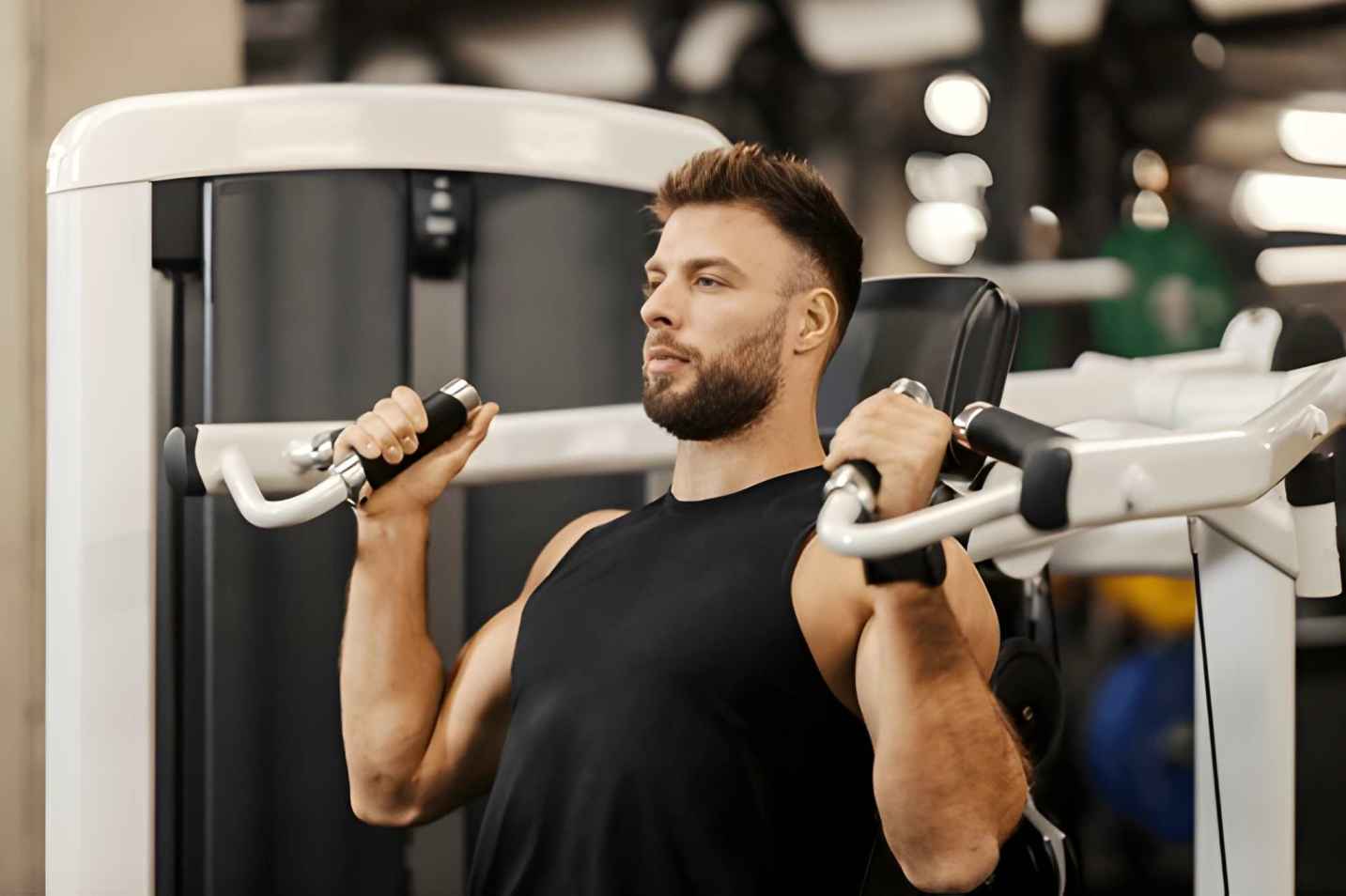
Ever wondered why your shoulders don’t look rounded enough or why your back still lacks width and thickness even after regular workouts?
The answer is often not effort—but exercise selection and execution.
As a certified personal trainer, I’ve seen many people struggle with shoulder and back development simply because they don’t use gym machines correctly—or skip them altogether. This guide will walk you through the best gym machines for shoulders and back, explain how they work, who should use them, and how to get the best results, all in simple, practical language.
Understanding Shoulder and Back Muscles (Why This Matters)
Before touching any machine, it’s important to know what you’re training.
Shoulder Muscles
Your shoulders are mainly made of the deltoid muscle, which has three parts:
- Front delts – help with pushing movements
- Side delts – give shoulders their width
- Rear delts – improve posture and shoulder balance
Small rotator cuff muscles support these movements and protect the shoulder joint from injury.
Back Muscles
The back is a large muscle group that includes:
- Latissimus dorsi (lats) – create a wide V-shape
- Trapezius (traps) – support shoulder movement and posture
- Rhomboids – help squeeze shoulder blades together
- Erector spinae – support the spine and lower back strength
Strong shoulders and back improve posture, pulling strength, and injury resistance.
Why Gym Machines Are Excellent for Shoulder and Back Training
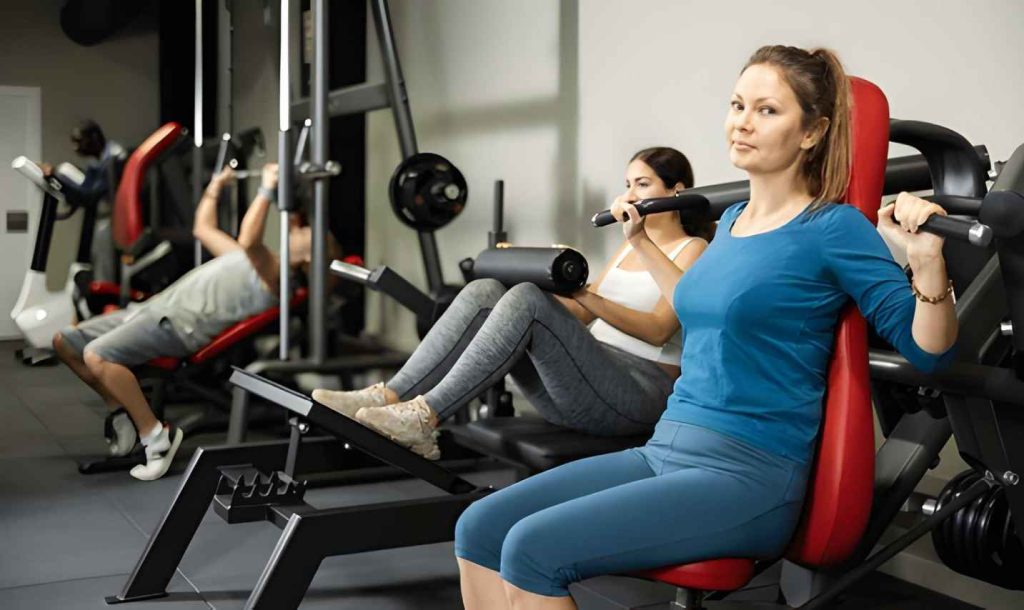
Many people believe free weights are always better—but machines have major advantages.
Gym machines provide:
- Controlled movement patterns
- Better muscle isolation
- Reduced risk of injury
- Easy progression for beginners
- Constant tension on muscles
Fact:
According to the Journal of Strength and Conditioning Research, machines can produce similar muscle activation to free weights when used correctly—especially for hypertrophy-focused training.
Machines are ideal if you’re:
- New to the gym
- Recovering from injury
- Training for muscle growth
- Focused on perfecting form
Best Gym Machines for Shoulder Training
Shoulder Press Machine
This machine targets front and side delts while also engaging the triceps.
Why it works:
- Keeps your spine supported
- Reduces lower back strain
- Allows safe overhead pressing
Trainer tip:
Adjust the seat so handles start at shoulder level. Don’t lock your elbows at the top.
Lateral Raise Machine
One of the best machines for shoulder width.
Muscles targeted:
- Medial (side) delts
Why it’s effective:
- Prevents swinging
- Keeps constant tension
- Improves shoulder symmetry
Common mistake:
Using too much weight and letting traps take over.
Rear Delt Fly (Reverse Pec Deck)
Often ignored—but essential.
Benefits:
- Strengthens rear delts
- Improves posture
- Reduces shoulder pain risk
Fact:
Studies show weak rear delts are linked to rounded shoulders and neck pain, especially in desk workers.
Cable Shoulder Machines
Cable machines allow:
- Single-arm lateral raises
- Cable upright rows
- Constant muscle tension
Great for correcting muscle imbalances.
Before jumping into these exercises, don’t forget to explore how proper warm-ups can skyrocket your shoulder performance. Check out our section on warming up your shoulders for maximum performance and prepare like a pro!
Best Gym Machines for Back Training
Lat Pulldown Machine
A must-have for building back width.
Works:
- Lats
- Upper back
- Biceps (secondary)
Grip variations change muscle emphasis:
- Wide grip → more upper lats
- Neutral grip → better shoulder comfort
Stat:
Lat pulldowns can activate over 80% of lat muscle fibers when performed with proper form.
Seated Row Machine
Excellent for mid-back thickness and posture.
Benefits:
- Strengthens rhomboids and traps
- Improves shoulder blade control
- Reduces upper-back weakness
Focus on squeezing shoulder blades, not pulling with arms only.
Assisted Pull-Up Machine
Perfect for beginners working toward full pull-ups.
Why it helps:
- Gradual strength progression
- Safer than jumping into bodyweight pull-ups
- Builds confidence
T-Bar Row Machine
Great for serious back growth.
Targets:
- Upper back
- Lats
- Spinal stabilizers
Keep your chest supported if available to protect your lower back.
Back Extension Machine
Strengthens lower back and core.
Important:
Use slow, controlled movements. Avoid hyperextension.
Shoulder and Back Workout Plans Using Machines
Beginner Machine Workout
- Shoulder press machine – 3×12
- Lateral raise machine – 3×15
- Lat pulldown – 3×12
- Seated row – 3×12
Intermediate Split
Train shoulders and back 2 times per week with progressive overload.
Advanced Hypertrophy Focus
Use techniques like:
- Drop sets
- Slow negatives
- Time under tension
Proper Form, Safety, and Injury Prevention
Always:
- Warm up shoulders before pressing
- Adjust machine seats correctly
- Maintain neutral spine
- Avoid jerky movements
Fact:
Poor machine setup is responsible for over 60% of gym-related shoulder injuries, according to fitness injury surveys.
Machines vs Free Weights: Which Is Better?
The truth? Both are important.
Machines:
- Better for isolation
- Safer for beginners
- Great for muscle growth
Free weights:
- Improve balance
- Build functional strength
Best approach: Combine both.
Who Benefits Most from Shoulder & Back Machines?
- Beginners
- Seniors
- People with joint pain
- Post-injury clients
- Overweight trainees
Machines provide confidence, safety, and consistency.
Common Mistakes to Avoid
- Ego lifting
- Skipping rear delts
- Poor posture
- No warm-up
- Rushing reps
For more inspiration and to elevate your gains, don’t forget to explore our guide on 10-minute shoulder workouts—because even a small window of time can spark serious results.
Tips to Maximize Results
- Focus on mind-muscle connection
- Train shoulders and back 2–3 times weekly
- Eat enough protein
- Sleep at least 7 hours
- Track progress
Real Client Testimonial
“I struggled with shoulder pain for years. Switching to machine-based training helped me build strength without pain—and my posture improved in just 8 weeks.”
— Ali, 34, Gym Member
Frequently Asked Questions
Are gym machines effective for muscle growth?
Yes. When used correctly, they’re excellent for hypertrophy.
Can beginners rely only on machines?
Absolutely. Machines are ideal for learning movement patterns.
How often should I train shoulders and back?
2–3 times per week with proper recovery.
Final Thoughts
Gym machines are not “easy tools”—they’re smart tools. When used correctly, they can help you build strong shoulders, a wider back, better posture, and fewer injuries.
If your goal is safe, consistent, and visible progress, gym machines should be a key part of your training plan.