Skip to content

What if the problem was never you, but the workout you were forcing yourself to do?
If that question hits home, you are far from alone. Most people who tell me they “just aren’t the exercise type” have not actually failed at fitness. They have only ever tried forms of exercise that were never built for them, in environments that made them feel judged instead of supported.
As a certified personal trainer, I have watched hundreds of people go from dreading the gym to genuinely missing their workouts on rest days. The shift rarely comes from more willpower. It comes from a completely different approach.
This guide walks through exactly how that shift happens, in plain, practical language, so you can start building a relationship with movement that actually feels good.
Why So Many People Struggle to Enjoy Exercise
Before we talk about solutions, it helps to understand why exercise feels like a chore for so many people in the first place. This is not a small, personal problem. It is a widespread pattern backed by real numbers.
According to World Health Organization data, roughly 31 percent of adults worldwide, close to 1.8 billion people, are not getting the recommended amount of physical activity. In the United States, the picture looks similar. One national survey found that nearly 4 in 10 Americans reported never working out or exercising vigorously in a typical week.
So why is exercise such a hard habit to keep? A UK survey asked adults about their biggest barriers, and the top answer was not lack of time or money. It was something more emotional: nearly 6 in 10 respondents admitted they know they should exercise more, but find it boring or hard work. Other common reasons included using household chores as a stand-in for real activity, and simply feeling too tired after a long day.
This tells us something important. The barrier is rarely information. Most people already know exercise is good for them. The real barrier is the experience of the workout itself.
Interestingly, research backs this up in a striking way. One clinical study looking at physical activity adherence noted that increases in how much someone genuinely enjoyed a workout were a stronger predictor of whether they kept exercising than increases in their confidence or self-efficacy. In plain terms: liking your workout matters more than believing you’re capable of doing it.
That single finding is the foundation of everything in this article. If we can help you enjoy the process, consistency follows naturally.
For more ways to keep your fitness routine feeling fresh, check out our article on fitness tips to stay motivated. It’s full of practical advice to help you stay driven and keep moving forward, no matter what.
Common Roots of Exercise Aversion
A few patterns show up again and again with new clients:
- Past negative experiences. Awkward memories from school PE class, an intimidating big-box gym, or an injury that happened during an unsupervised workout.
- The all-or-nothing trap. Jumping straight into an extreme program, burning out within two weeks, then feeling like a failure.
- Exercise as punishment. Treating workouts as a penalty for what you ate, rather than something you do for your body.
- Mismatched activity. Being told that running or spin class is “real exercise,” even if you have always hated both.
None of these mean you are broken. They mean you have not yet found your version of movement.
The Psychology Behind Enjoying a Workout

Understanding a little bit of the science here can genuinely change how you approach fitness.
Working Toward Something vs. Running Away From Something
Motivation researchers often separate goals into two types. Extrinsic motivation is working out to avoid a negative outcome, like disease or judgment from others. Intrinsic motivation is working out because the activity itself is rewarding, whether that is the challenge, the focus, or the way your body feels afterward.
Extrinsic motivation can get you started, but it rarely keeps you going for years. Intrinsic motivation is what turns exercise into an actual habit rather than a temporary punishment.
Autonomy, Competence, and Connection
A well-known framework in behavioral psychology, self-determination theory, suggests people stick with activities that satisfy three needs:
- Autonomy – feeling like you chose this workout, rather than having it forced on you
- Competence – feeling capable and seeing steady improvement
- Relatedness – feeling connected to other people while doing it
Notice that none of these needs require you to love burpees or sprint intervals. They simply require the right structure and support around the workout, which is exactly what a good coaching relationship provides.
Building an Identity, Not Just a Streak
Chasing a single goal, like fitting into a certain dress size, tends to fade once the goal is hit or missed. A more durable approach is shifting your self-image: “I am someone who shows up and moves my body,” rather than “I am trying to lose 20 pounds.” Identity-based habits tend to outlast goal-based ones because they are not tied to a finish line.
Find Movement You Actually Enjoy
Exercise is not one thing. It is hundreds of things, and you are allowed to be picky.
If the gym floor with rows of machines makes you anxious, that is simply not your environment, and that is fine. Some people thrive with structured strength training. Others feel more alive hiking, playing pickup basketball, dancing, swimming, or joining a recreational sports league.
Living in Austin actually works in your favor here. Trails around Lady Bird Lake and the Barton Creek Greenbelt offer year-round options for walking, running, or biking outdoors, and the mild winters mean outdoor movement is realistic almost every month of the year. If a treadmill feels like a chore but a sunset walk along the lake does not, that walk counts as real, valuable exercise.
A simple exercise: think back to the last time you were physically active and did not watch the clock. What were you doing? That memory is often a clue toward the type of movement that fits your personality, whether that is competitive, social, solo, or exploratory.
For even more inspiration to elevate your outdoor fitness routine, explore the recommendations and tips shared in other sections—there’s always something new to discover under Austin’s endless skies.
The Power of Community and Accountability
Humans are social creatures, and exercise is no exception to that rule. Working out alongside other people tends to increase both enjoyment and long-term consistency, largely because it satisfies that “relatedness” need mentioned earlier.
This is one of the biggest reasons semi-private training has grown in popularity. It offers a middle ground between an intimidating group class and an expensive one-on-one session, letting you train with a small group of people working toward similar goals, in an atmosphere that feels more like a team than a class.
One client who started training after significant weight loss described how surprised she was by how much she came to look forward to her sessions, even though she originally just wanted someone to teach her the basics. She credited the encouragement and knowledge of her trainer, along with the support of the wider gym community, as the reason it became something she couldn’t imagine her routine without.
A good trainer also removes a layer of mental friction most people do not talk about: decision fatigue. Not having to figure out sets, reps, or “what do I even do today” means you can walk in and simply move, which on its own makes workouts feel lighter and more enjoyable.
Set Goals That Motivate Instead of Punish
Many people set fitness goals that are, without realizing it, a little cruel. “Lose 20 pounds by summer” puts your entire self-worth on a scale number and a deadline.
Try shifting toward goals that reward you along the way:
- Process goals such as “train three times this week,” instead of only outcome goals like a target weight
- Performance goals such as adding five pounds to a lift or walking a mile without stopping
- Non-scale victories such as better sleep, steadier energy, improved mood, or clothes fitting more comfortably
Tracking these wins, even in a simple notes app, gives you regular proof that the work is paying off, which keeps motivation alive between the big milestones.
Reduce the Friction to Get Started
Enjoyment is hard to feel if you never make it to the workout in the first place. Lowering the barrier to entry matters more than most people expect.
A few practical friction-reducers:
- Choose a location close to home or work, since convenience beats “perfect” almost every time
- Lay out workout clothes the night before
- Book sessions on your calendar like any other appointment, so they are not optional decisions each day
- Start with short, focused sessions rather than marathon workouts
This is part of why 45-minute training sessions tend to work well for busy schedules. They are long enough to be effective, but short enough that they do not eat your entire evening or feel overwhelming to commit to.
Reframe Your Mindset Around Movement
A lot of exercise dread comes from the story we tell ourselves about why we are doing it.
Instead of viewing a workout purely as calorie burning or damage control, try treating it as stress relief, mental clarity, or simply proof of what your body is capable of. Gratitude-based movement, appreciating your legs for carrying you up a hill rather than criticizing how they look, tends to make workouts feel less like punishment and more like self-care.
It also helps to unplug from comparison. Social media fitness content is often curated, filtered, and unrealistic. Your only real competition is the version of you from last month.
Fuel and Recover the Right Way

How you eat and rest directly affects how much you enjoy training. Showing up under-fed or exhausted makes almost any workout feel harder than it needs to be.
A few basics worth prioritizing:
- Eat enough protein and carbohydrates to fuel your sessions, rather than restricting heavily beforehand
- Stay hydrated throughout the day, not just during your workout
- Treat rest days as productive, not lazy, since muscles rebuild during recovery
- Get consistent sleep, since poor sleep is strongly linked to lower workout motivation the next day
This is also where nutrition coaching pairs so well with training. When food and movement work together instead of against each other, workouts stop feeling like punishment for what you ate the night before.
Working With a Personal Trainer Who Makes It Fun
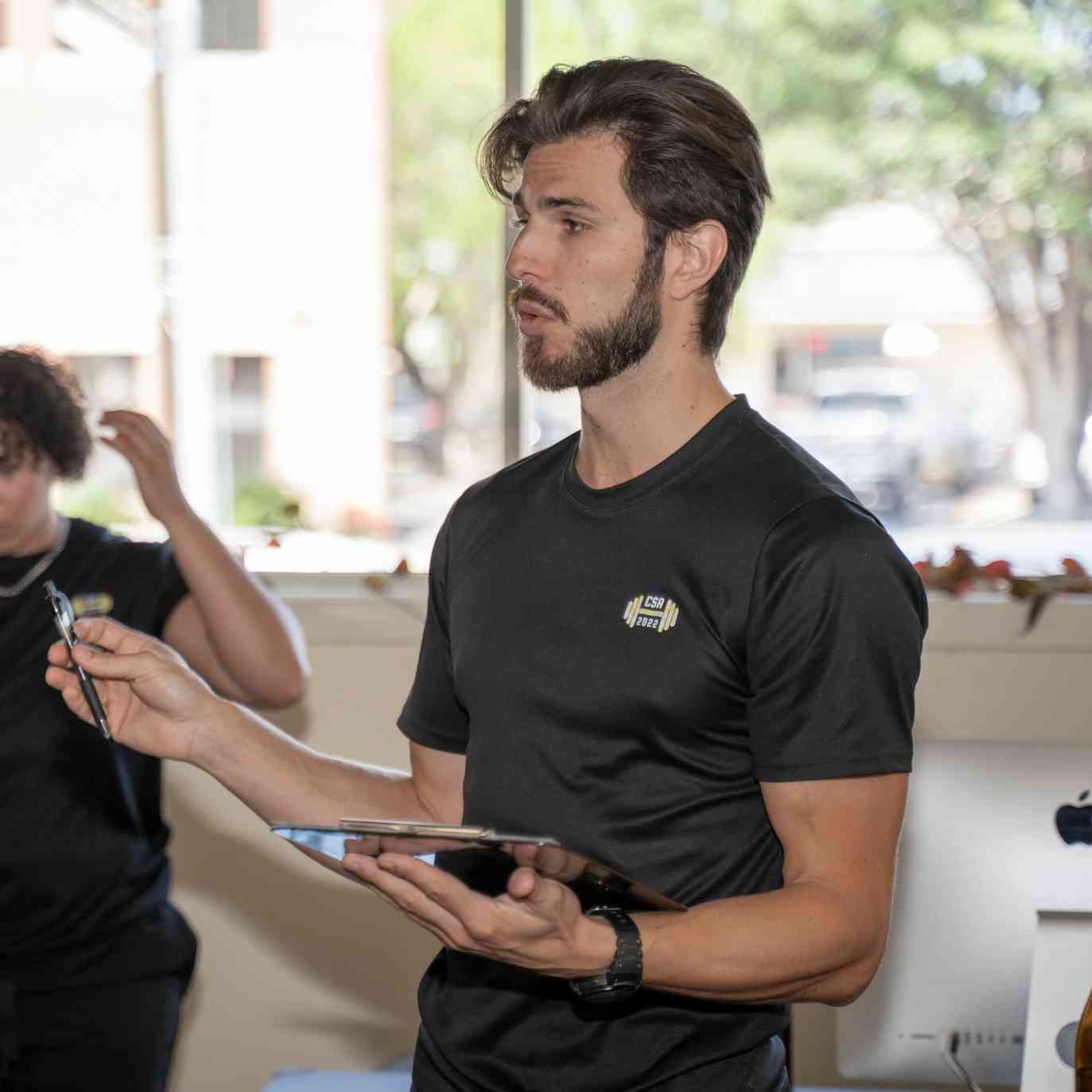
A skilled trainer does more than count your reps. They build a program around your preferences, your body, and your schedule, instead of handing you a generic template pulled from the internet.
Good coaching also builds confidence quickly, because someone is watching your form, correcting small issues before they become injuries, and celebrating progress you might not notice yourself. One long-time client who trains as a runner described how workouts stayed fun and dynamic because there was always variety, along with regular conversations about how her body was feeling and where she was improving.
That combination of expertise, encouragement, and genuine care is very hard to replicate on your own, especially in the first few months when everything still feels unfamiliar.
Common Mistakes That Kill Exercise Enjoyment
Even motivated beginners fall into a few avoidable traps:
- Doing far too much, far too soon, and ending up sore, discouraged, or injured
- Comparing your first month to someone else’s fifth year of training
- Choosing a workout because it’s trending online rather than because you like it
- Skipping warm-ups and cool-downs, which increases soreness and injury risk
- Ignoring how you feel mentally after a session, even when the physical numbers look good
Avoiding these mistakes alone can make a noticeable difference in how sustainable your routine feels.
How Long Until Exercise Actually Feels Enjoyable?
This is one of the most common questions new clients ask, and the honest answer is that it varies. Behavioral research on habit formation, led by psychologist Phillippa Lally at University College London, found that new daily habits took a median of 66 days to become automatic, with individual results ranging anywhere from 18 to 254 days depending on the person and the behavior. Exercise, being a more complex habit than something like drinking a glass of water, often sits toward the longer end of that range.
The practical takeaway: give yourself two to three months before judging whether you “like” exercise. Missing a single day here or there will not undo your progress. Consistency, not perfection, is what builds the automatic, almost enjoyable pull toward your next session.
Frequently Asked Questions
How long does it take to start enjoying exercise?
Most people notice a meaningful shift somewhere between four and twelve weeks of consistent training, though it can vary widely from person to person.
What if I’ve tried everything and still hate working out?
It is worth questioning whether you have tried the right type of movement, in the right environment, with the right support, rather than assuming exercise simply isn’t for you.
Is it normal to not enjoy exercise at first?
Yes. Enjoyment is often a skill that develops with repetition, competence, and the right social environment, not something that is guaranteed from day one.
What type of exercise is best for beginners who hate the gym?
Walking outdoors, small group training, or activity-based options like hiking or recreational sports are often a gentler entry point than a traditional gym floor.
Can a personal trainer really make exercise more enjoyable?
Yes. A trainer removes guesswork, corrects form to prevent frustration and injury, and provides accountability and encouragement that are difficult to replicate alone.
Your Next Step Toward Actually Loving Movement

Enjoying exercise is not a personality trait you either have or don’t have. It is a skill, built through the right activity, the right environment, and the right support system around you.
If you have spent years forcing yourself through workouts you dread, that cycle can change. At Community Strength Austin, our approach is built around exactly what the research points to: personalized coaching, a supportive small-group community, and nutrition guidance that works together instead of against your goals. Our belief is simple. You are stronger together.
If you’re ready to feel different about movement, start with a free fitness assessment or ask about our 90-day transformation program. The version of you that looks forward to workouts is closer than you think.