Skip to content

Have you ever wondered, “Am I training enough with my personal trainer to actually see results—or am I doing too much or too little?”
This is one of the most common questions I hear as a certified personal trainer. And the truth is, there is no one-size-fits-all answer. The ideal number of personal training sessions per week depends on your goals, fitness level, recovery ability, and even your lifestyle.
In this guide, I’ll break everything down in simple terms so you can understand exactly how often you should train with a personal trainer—and why.
Understanding the Role of a Personal Trainer First
Before deciding how many times per week you should train, it’s important to understand what a personal trainer actually does.
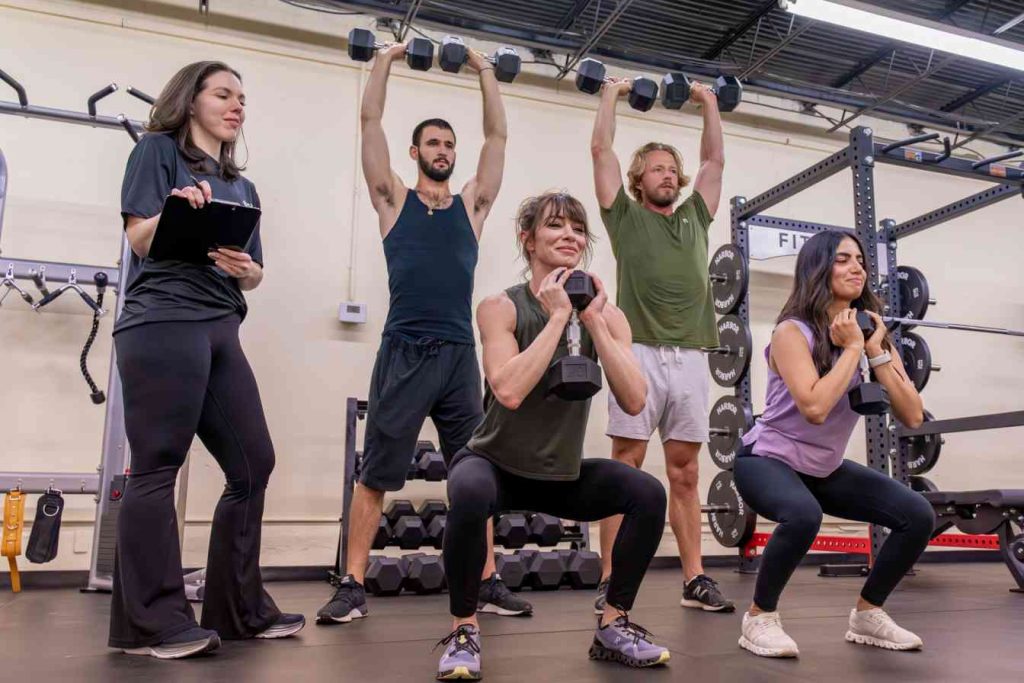
A personal trainer is not just someone who counts your reps. A good trainer helps you with:
- Designing a structured workout program (strength training, fat loss, or muscle building)
- Teaching correct exercise form to prevent injury
- Tracking progressive overload (gradually increasing difficulty for results)
- Providing accountability so you stay consistent
- Adjusting your gym training plan based on progress and recovery
In short, personal training sessions are about quality, not just quantity. What you do outside the session matters just as much.
The Simple Answer: How Many Sessions Per Week?
Here is a general guideline most certified trainers follow:
1 Session Per Week
Best for:
- Maintenance
- Light accountability
- Budget-conscious clients
You’ll usually get:
- A full-body workout plan
- Technique correction
- A weekly check-in
This works if you are already active or doing independent workouts.
2 Sessions Per Week (Most Popular Option)
Best for:
- Beginners
- Fat loss
- Busy professionals
- People returning to fitness
This is often considered the “sweet spot” because:
- You get enough guidance
- You still train independently
- It balances cost and progress
Many fitness studies and coaching models suggest that 2 structured sessions per week are enough to build strength, improve body composition, and develop consistency for beginners.
3 Sessions Per Week
Best for:
- Faster fat loss
- Muscle building (hypertrophy)
- Skill development in lifts
This frequency allows:
- Better workout split planning (push/pull/legs or upper/lower)
- More frequent progressive overload
- Faster correction of form issues
If your goal is visible transformation in 8–12 weeks, this is often ideal.
4–5 Sessions Per Week
Best for:
- Athletes
- Advanced lifters
- Intensive transformation programs
At this level:
- Training becomes highly structured
- Recovery becomes extremely important
- Programming includes strength cycles, conditioning, and mobility work
This is not necessary for most general fitness goals.
To take your fitness to the next level, don’t forget to explore resources like how to choose the perfect personal trainer in Austin—sometimes the right guide can unlock your true potential.
Key Factors That Decide Your Ideal Training Frequency
Let’s go deeper into what really determines your weekly training schedule.
1. Your Fitness Goals
Your goal is the biggest factor.
Fat Loss
If your goal is weight loss, you may benefit from:
- 2–4 personal training sessions per week
- A mix of strength training and cardio workouts
Strength training helps preserve muscle while burning fat, which improves metabolism.
Muscle Building (Hypertrophy)
For building muscle:
- 2–4 sessions per week works best
- Focus on resistance training, compound movements, and progressive overload
Muscle growth happens when training stress is balanced with recovery.
Strength Training
For improving strength:
- 2–3 sessions per week is ideal
- Heavier weights and longer recovery periods are required
Recovery is just as important as training here.
General Fitness
If your goal is health and energy:
- 1–2 sessions per week is enough
- Focus on mobility, basic strength, and habit building
2. Your Experience Level
Beginners
Beginners benefit most from:
- 1–3 sessions per week
Why?
Because you are learning:
- Proper form
- Breathing techniques
- Gym confidence
- Basic movement patterns
Most beginners see noticeable improvements in strength and energy within 4–6 weeks of consistent training.
Intermediate Trainees
- 2–3 sessions per week is ideal
- Mix of guided training and independent workouts
At this stage, trainers focus more on:
- Program structure
- Plateau breaking
- Technique refinement
Advanced Trainees
- 3–5 sessions per week
- Highly customized programming
At this level, training becomes performance-focused rather than basic fitness.
3. Recovery Ability (Often Ignored but Crucial)
Many people make the mistake of thinking more training equals faster results. That’s not always true.
Your body grows stronger during recovery, not during workouts.
Factors affecting recovery include:
- Sleep quality (7–9 hours recommended)
- Stress levels
- Nutrition (especially protein intake)
- Hydration
- Daily activity levels
If recovery is poor, even 2 sessions per week may feel too much.
4. Budget and Time Constraints
Let’s be practical.
Personal training is an investment. That’s why many people choose hybrid training models:
- 1–2 sessions with a trainer
- 2–3 independent workouts
This approach gives:
- Professional guidance
- Cost control
- Long-term sustainability
A good trainer will always adjust your plan based on your budget, not force unnecessary sessions.
5. Hybrid Training: The Most Effective Modern Approach
Today, most clients don’t train with a personal trainer every day. Instead, they follow a hybrid model.
Example weekly plan:
- Monday: Personal training session (strength)
- Wednesday: Independent cardio or gym workout
- Friday: Personal training session (full body)
- Weekend: Active recovery (walking, stretching)
This model improves:
- Independence
- Confidence in the gym
- Long-term adherence
For more tips on how to improve your fitness, check out our guide on the 5 common workout mistakes a personal trainer can help you avoid.
What Research and Fitness Experts Say
While exact numbers vary, organizations like the American College of Sports Medicine (ACSM) consistently emphasize:
- Regular resistance training (2–3 times per week) improves strength and health markers
- Consistency matters more than intensity alone
- Recovery is essential for muscle adaptation and injury prevention
In real-world coaching experience, clients who train 2–3 times per week with structure tend to see the most sustainable results.
Real Client Experiences (Testimonials)
Here are examples based on typical client journeys:
Client A (Fat Loss Journey)
“I started with 2 sessions per week. Within 10 weeks, I lost 6 kg and felt more energetic. What helped most was learning how to train on my own between sessions.”
Client B (Beginner Strength Training)
“I was new to the gym and had no idea what I was doing. Training twice a week with my coach helped me build confidence and avoid injuries.”
Client C (Muscle Building)
“When I moved to 3 sessions per week, my progress accelerated. My form improved and I finally understood how progressive overload works.”
Signs You Are Training Too Much
More is not always better. Watch out for:
- Constant muscle soreness
- Poor sleep
- Low energy during workouts
- Performance plateau
- Irritability or burnout
If you notice these signs, you may need fewer sessions or better recovery.
Signs You Are Not Training Enough
On the other hand:
- No visible progress after weeks
- Poor workout consistency
- Lack of structure
- Low motivation
In this case, increasing training frequency or adding a personal trainer session can help.
The Role of Recovery in Your Progress
Recovery is where your results actually happen.
To maximize results:
- Sleep 7–9 hours per night
- Eat enough protein (to support muscle repair)
- Stay hydrated
- Take at least 1–2 rest days per week
Many clients underestimate recovery and overtrain instead.
Final Answer: So, How Many Times a Week Should You Train?
Here’s the simple breakdown:
- 1x/week: Maintenance and guidance
- 2x/week: Best for most beginners and general fitness
- 3x/week: Faster transformation and muscle gain
- 4–5x/week: Advanced training or athletic goals
But the real answer is this:
The best training frequency is the one you can sustain consistently while recovering properly.
Final Thoughts from a Personal Trainer
After working with many clients, I’ve seen one clear pattern: consistency beats intensity.
People who train 2–3 times per week for months always outperform those who train 5–6 times per week for a short period and burn out.
Your goal should not be to train the most—it should be to train smart, recover well, and stay consistent long enough to see real change.
If you get that balance right, results will follow naturally.
Start Your Journey with Community Strength Austin

Are you ready to build consistency in your fitness routine and achieve lasting results? At Community Strength Austin, our expert personal trainers are here to guide you every step of the way. Whether you’re just starting out or looking to fine-tune your approach, we’ll help you train smart, recover well, and reach your goals sustainably.
Join us today and let’s create a plan that works for you. Your fitness transformation starts here—contact us now to schedule your first session!